After the Last Chair Folds: Why Your Social App Quits at 11 P.M.

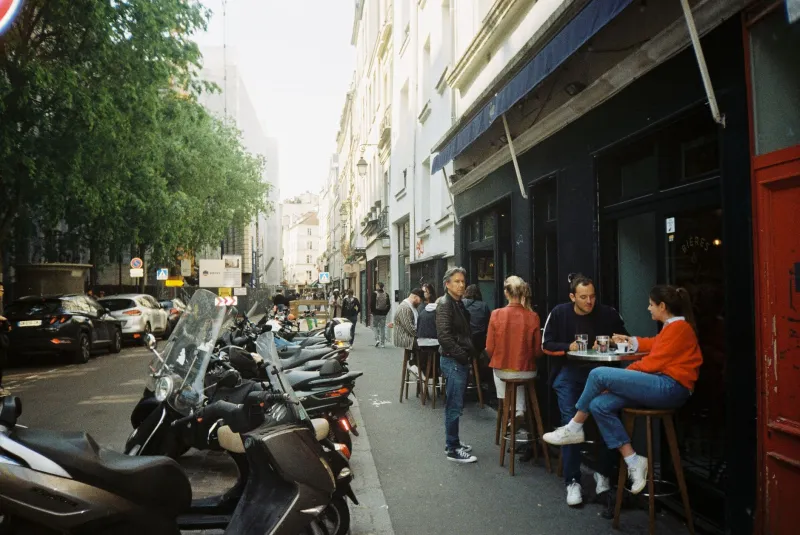
Photo: Zeete, CC BY-SA 4.0, via Wikimedia Commons
You know the drill. A trivia night, a rooftop mixer, a friend-of-a-friend's birthday at a bar in Brooklyn. You meet someone funny. You swap the usual promises — "we should grab coffee," "I'll send you that link" — and then everyone goes home. The group chat gets one final "great seeing everyone!" and quietly dies by Tuesday. The connection that felt so easy at 9 p.m. has evaporated by noon the next day.
That gap is not a people problem. It's a product problem. Social apps are built to get you to the event: the invite, the RSVP, the map link, the reminder push. Then the moment the event ends, the product has nothing left to say. It's like a host who throws a great party and then turns off the lights while people are still putting on their coats.
The day after is where the real work happens. Not the heavy work of scheduling a second hangout — the light work of keeping the thread alive. A photo, a thank-you, a low-stakes "again soon?" That's the window. And most apps miss it completely.
The 24-Hour Cliff
There's a reason the day after feels so awkward. The shared context is still fresh, but the excuse to reach out is fading fast. At the event, you had a built-in reason to talk: the band was loud, the appetizers were weird, the host gave a toast. The next morning, you have a blank message box and a vague sense that saying something now might be strange.
In the US, this plays out constantly. A networking mixer in Austin ends at 8:30, and by the next afternoon the business cards are in a jacket pocket. A neighborhood potluck wraps up, and the paper plate of leftover cookies goes home with someone who now has no reason to text the person they spent an hour laughing with. The event was the spark. The follow-through is the firewood. Without it, you get a lot of one-off nights and not many recurring friendships.
Apps that ignore this are essentially optimizing for attendance instead of relationships. Attendance is easy to measure. Relationships are messy. But users feel the difference immediately.
Three Moves, One Screen
The fix doesn't need to be a whole new social network. It can be a single, lightweight flow that appears in the 24 hours after an event and then disappears. Call it the day-after screen. It has three jobs:
1. A shared photo drop
Not a full album, not a feed post. Just a temporary, private place where people who were there can drop the four photos they actually took. The key is low effort: no captions required, no tagging ceremony, no public audience. A simple grid with a one-tap "add yours" button. When the drop closes after a week, it disappears. That slight impermanence is a feature. It gives people a reason to look now.
2. A one-tap thank-you
This is the most underrated social button in existence. A single tap that sends a short, pre-written but editable note to the host or to the group: "Thanks for pulling this together." It takes two seconds. It makes the host feel seen. And it creates a tiny opening for a reply. The thank-you is not a big emotional commitment. That's exactly why it works.
3. A low-pressure next-step prompt
This is where most apps overreach. They jump straight to "Schedule another event!" with a calendar picker and a location field. That's too much too soon. The better version is softer: a single question — "Want to do this again?" — with three lightweight options: "Yes, same crew," "Yes, but smaller," and "Not now." No date required. No pressure. Just a signal. If enough people tap yes, the app can quietly surface a suggestion later, but it doesn't force the group into planning mode while everyone is still tired.
That's the whole flow. Photos, thanks, a pulse check. It fits on one screen and takes under a minute. And it does more for retention than another push notification ever will.
Good, Bad, and Ugly Post-Event UX
Some apps already do pieces of this well. Group messaging tools that let you create a temporary thread around an event are closer than most. Photo-sharing apps that auto-suggest a shared album based on time and location are on the right track, though they often make the album permanent and public-feeling, which kills the casual vibe. The best examples keep the window short and the audience obvious.
The bad versions are everywhere. Ever gotten a "How did we do?" survey the morning after a party? That's a corporate feedback loop wearing a party hat. Ever been added to a 47-person group chat with no context and no exit? That's the opposite of lightweight. And the truly ugly version is the app that sends a generic "We miss you!" push three days later, after the moment has passed and the shared context has gone stale.
The pattern is clear: good post-event UX feels like a host checking in. Bad post-event UX feels like a marketing team checking a box.
A Practical Checklist for Designers
If you're building a social product for US users who want more recurring friendships, here's a short list to run before shipping:
- Time-box the flow. Surface it between 12 and 36 hours after the event ends. Earlier feels pushy. Later feels pointless.
- Make the audience obvious. Everyone in the flow should know exactly who else can see the photos and the thank-yous.
- Default to private. A shared drop is not a feed post. Keep it closed by default.
- One tap for the thank-you. No typing required, but allow an edit for people who want to say more.
- Offer a soft no. "Not now" should be as easy to tap as "yes." That's what keeps the prompt from feeling like a guilt trip.
- Let it expire. A seven-day photo drop and a 48-hour prompt window are enough. Closure is part of the design.
- Don't ask for a rating. The event already happened. Let the follow-through be the feedback.
Why This Matters More Than Another Feature
The US social landscape is full of apps that are great at getting people together and terrible at keeping them together. We have more ways to RSVP than ever, and fewer reasons to text the person we met at the last one. The day-after flow is a small fix for a big problem: the gap between a good night and a real friendship.
At OranSNS, the whole premise is connecting smarter and growing faster together. That doesn't mean more events. It means better handoffs between them. The last chair folds, the lights come up, and the app should still have one more thing to offer — not a survey, not a push, just a quiet little bridge to the next time.