The Gentle Ping: Why a Reconnect Button Beats Another Push Notification
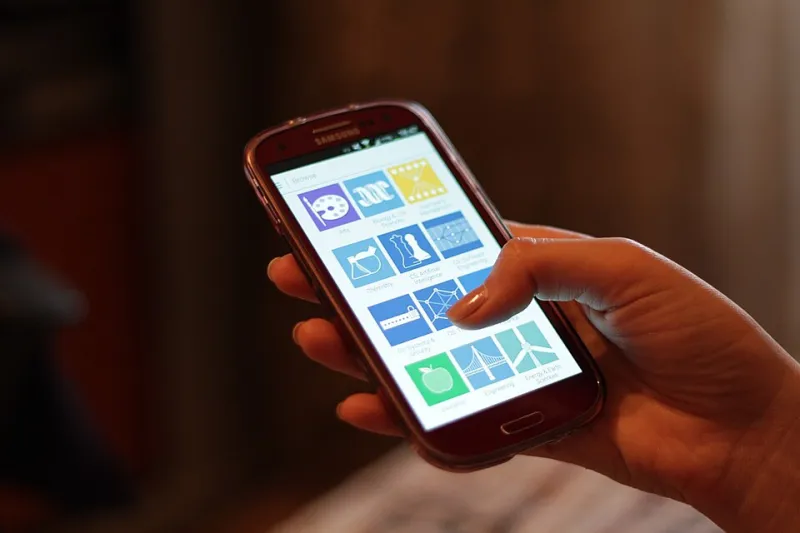
Photo: Shixart1985, CC BY 2.0, via Wikimedia Commons
You know the contact. The college roommate who still texts in full sentences. The former coworker who once talked you out of a truly bad haircut. The friend from that summer in Austin. They're in your phone, buried under delivery confirmations and two-factor codes. Every few months you open their thread, type “we should catch up,” then delete it because you don't know how to start.
Most social apps see that pause and reach for the megaphone. They pelt you with “You haven't talked to Jordan in a while!” notifications, streak counters that turn friendship into a Duolingo lesson, and “people you may know” carousels that feel less like a bridge and more like surveillance. The result: we've trained a generation to swipe away anything that smells like homework.
There's a better feature hiding in plain sight, and it isn't a notification at all. It's a nudge — one small, voluntary action that makes reaching out easier without making anyone feel behind. Call it the gentle ping. In 2026, the best social products will compete on how little they need to interrupt you, not how often they can.
The Arms Race Nobody Won
Push notifications are a volume business. More pings, more opens, more sessions. But re-engagement metrics are a trap. If your app has to nag people to come back, the product isn't solving a real problem — it's manufacturing one. And users can tell. The average US smartphone owner gets dozens of notifications a day, and the reflex is brutal: swipe, dismiss, forget.
Streaks make it worse. They turn connection into a compliance exercise. Miss a day and you haven't just lost a number; you've “failed” a friend. That's not retention. That's a guilt engine with an app icon.
Algorithmic creep is the third problem. When an app surfaces someone you haven't talked to in months, it often does so with a creepy specificity — “It's been 47 days since you talked to Maya” — that makes the user feel monitored rather than helped. The intent might be good. The execution feels like a calendar reminder for your feelings.
What a Nudge Gets Right
A gentle ping flips the model. Instead of asking, “How do we get the user back into the feed?”, it asks, “How do we make one real interaction easier?”
That difference matters. A nudge is opt-in, low-frequency, and easy to ignore. It doesn't count anything. It doesn't publicize anything. It doesn't turn a friendship into a KPI. It simply lowers the activation energy for a small, human action — a text, a voice note, a two-line hello.
The best versions feel like a helpful friend tapping you on the shoulder, not a growth team tapping a dashboard.
Design Patterns That Feel Human
Time it around real life, not app behavior. A reconnect prompt on a Tuesday at 2 p.m. is noise. A prompt the week before Thanksgiving, or after a big local event you both care about, feels contextual. Use coarse signals — a shared city, a shared group, a calendar moment — not deep surveillance.
Make the first move one tap, not a blank page. The hardest part of reaching out is the blank text field. Offer three lightweight openers: “Thinking of you,” “Saw this and thought of you,” and “Free for a call this week?” Let the user edit or send as-is. No required message. No pressure to be profound.
Never show a counter. No “12 friends you've lost touch with.” No red badge. No weekly reconnect score. The moment you quantify the relationship, you've turned it into a chore.
Let the user dismiss without penalty. A gentle ping should be as easy to close as a weather alert. If the same prompt reappears every day, it's not gentle anymore. Cap it at something like once a month per contact, and remember the no.
Keep the action private by default. The recipient shouldn't see “Reconnect prompt sent” or any metadata that makes the hello feel automated. The message should arrive like a normal message, because it is one.
Design for the recipient, too. A reconnect feature fails if it makes the other person feel like a task on someone's to-do list. Avoid prefilled messages that sound like a CRM email. Avoid read receipts on the nudge itself. The goal is a conversation, not a completed workflow.
Don't Make the Recipient Do Emotional Labor
There's a subtle failure mode here: the nudge solves the sender's hesitation but dumps awkwardness on the receiver. “Hey! It's been a while!” can feel like a guilt trip if it arrives out of nowhere with no context.
The fix is to anchor the nudge in something real. A shared photo, a group you're both in, a local news item, a song you both liked. Context gives the receiver an easy way in. It also keeps the app from feeling like a robot that just discovered loneliness.
And if the receiver doesn't respond? That's fine. A gentle ping is not a demand. The product should make it obvious that no reply is required. The moment users feel obligated, the feature becomes another inbox.
Why OranSNS Should Sweat the Small Stuff
OranSNS doesn't need to win a notification arms race. It needs to be the app people open when they actually want to connect — not the one that buzzes until they comply. A reconnect button is a small feature with a big signal: this platform is built around voluntary, human-scale actions.
That's also a product differentiator. Most social apps optimize for time spent. A reconnect feature optimizes for moments that matter. Those are different goals, and users can feel the difference. A platform that helps you send one good message is more valuable than one that helps you scroll for an hour.
There's a business case, too. Small, positive interactions build trust. Trust builds retention. Retention built on guilt is fragile; retention built on “this app actually helps me be a better friend” is durable.
The Metric That Actually Matters
If OranSNS builds this, don't measure it with daily active users. Measure successful reconnects: two people exchange at least one message after a nudge, and neither one reports the experience as annoying. Measure opt-outs. Measure how often users edit the suggested opener — that tells you whether the prompts feel natural or canned.
And measure the silence. If people ignore the nudge and nothing bad happens, that's a feature working as intended. A gentle ping should feel like a door left open, not a hand pushing you through it.
The Quiet Feature That Wins
The best social feature in 2026 might not be a feed, a filter, or a viral loop. It might be a single button that says, “Hey — want to reach out?” and then gets out of the way. No streaks. No scores. No algorithmic creep. Just a small, voluntary nudge toward the people we already meant to text.
That's the kind of connection tool worth building. And it's the kind OranSNS is uniquely positioned to get right.