The Cooler Problem: Why Your Social App Keeps Losing the Plan at the Finish Line
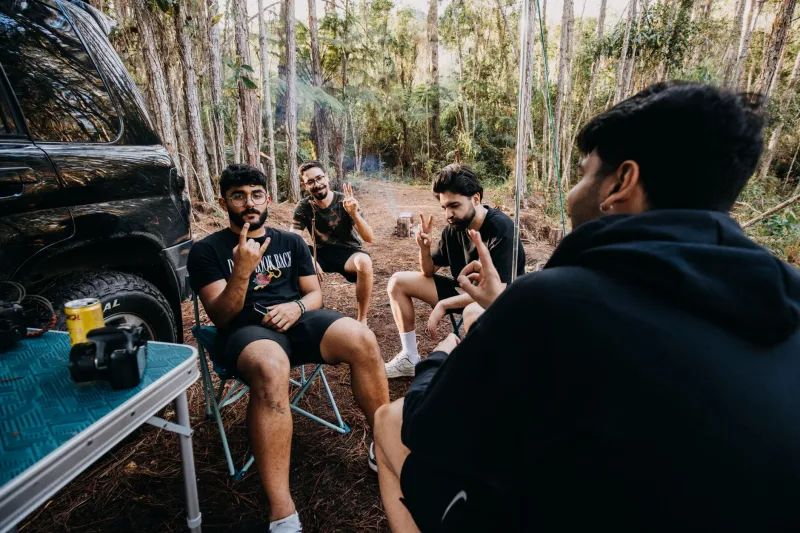
Saturday, 4:12 p.m. The group chat has been glowing all week. The plan is locked: barbecue at Dana’s place, 6 p.m. Then someone types the question that kills more meetups than rain ever will: “Who’s driving?”
Crickets. A thumbs-up from the guy who always thumbs-up. A “I can maybe swing by” from someone who cannot, in fact, swing by. By 5:30, two people are still waiting on a ride, nobody bought ice, and the host is texting “no rush!!” while staring at an empty cooler.
The plan didn’t die from lack of interest. It died at the finish line.
Most social apps are built for the fun part—discovery, chat, the RSVP. They get you into the conversation and then vanish right when the conversation has to become a car, a grocery run, a headcount, and an ETA. That gap is where good intentions go to die. And it’s exactly where a social app can earn a permanent spot on your phone.
The Last Mile Is the Whole Race
We talk about “last mile” in delivery and transit, but social plans have one too. It’s the messy 90 minutes between “we should hang out” and “I’m parked out front.” In that window, a group needs four things: a ride, supplies, a confirmed headcount, and some honest signal about when people will actually arrive.
None of that is sexy. None of it demos well in a keynote. But it is the difference between a feed full of memories and a feed full of “we should do this again soon” posts that never become anything.
Partiful gets the invite right, then hands you back to the group chat for the rest. Splitwise is excellent at the money part, but it’s a separate app you open after the plan is already over. Find My and Google Maps can share an ETA, but only if everyone remembers to use them and nobody feels weird about location sharing. WhatsApp polls can settle a restaurant choice. They cannot settle who is buying the ice.
That’s not a knock on those tools. It’s evidence that the logistics layer is real, repetitive, and currently scattered across five apps and a prayer.
What “Plan Completion” Actually Looks Like
The fix isn’t to turn your social app into project management software. Nobody wants a Gantt chart for a birthday dinner. The fix is a small, optional layer that activates when a plan gets real. Think of it as the difference between a group chat and a group chat with a clipboard.
Here’s a practical checklist worth building:
- Role claiming, not assigning. Let people tap “I’ll drive,” “I’ve got snacks,” “I’ll bring the cooler.” Nobody has to be the nag. The app just shows what’s covered and what’s still open.
- Live headcount with plus-ones. A simple number that updates when someone RSVPs, bails, or brings a friend. No spreadsheet. No “wait, is Marcus coming?”
- Arrival status without surveillance. A one-tap “leaving now,” “running 20 late,” or “here” button. Not constant location tracking—just enough signal to keep the host from pacing.
- A shared supply list with checkboxes. Ice, cups, chairs, the weird allergen-free thing someone promised. Check it off, and everyone sees it’s handled.
- Cost splitting tied to the plan. If the app already knows who showed up and who bought what, the post-plan Venmo shuffle gets a lot shorter.
- A gentle departure nudge. Not a push notification that screams. A quiet “Plan starts in 45 minutes—need a ride?” that feels like a friend, not a calendar alert.
- A post-plan memory. One photo, one line, one “same time next month?” prompt. Close the loop so the next plan starts warmer than the last.
That’s it. No mega-feature. No new social network. Just the boring plumbing that turns a group chat into a group.
Why Boring Beats Another Feed
Retention is usually framed as a content problem: better posts, better recommendations, more reasons to scroll. But social apps don’t stick because people want more feed. They stick because people want more plans that actually happen.
A feed gives you a dopamine hit. A completed plan gives you a memory, a friendship, and a reason to open the app next week. The logistics layer is a habit loop with real-world payoff: claim a role, get a confirmation, show up, feel good, do it again. That’s stickier than any infinite scroll, and it doesn’t require a content team.
It also solves a quiet social problem. In most friend groups, one person becomes the unpaid logistics manager—the driver, the reminder, the cooler sheriff. That person burns out. A good plan-completion layer distributes the work without making anyone feel like they’re being managed. It makes helping out the default, not a favor.
At OranSNS, we think “connect smarter” shouldn’t stop at the introduction. A connection that never becomes a meetup is just a contact. The apps that win the next few years will be the ones that respect the unglamorous middle of social life: the ride, the ice, the headcount, the “leaving now.”
So before you build another feed, ask the question every group chat eventually asks. Who’s driving? If your app has an answer, you might have a product. If it doesn’t, you have a very nice place to talk about a plan that never happens.