The 4% Problem: Every Social App Needs a Low-Energy Button
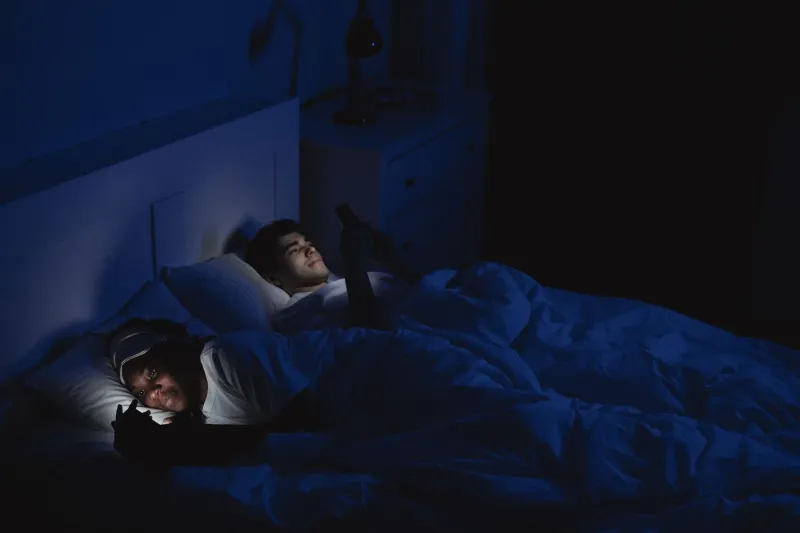
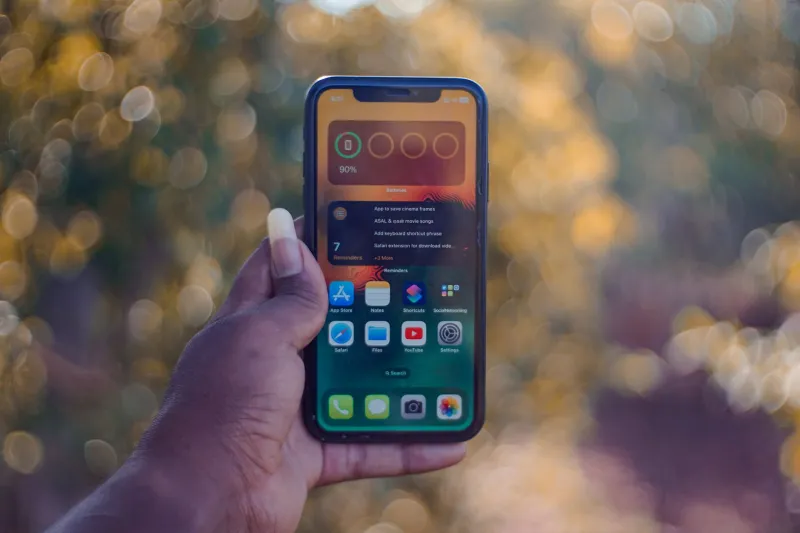
It's a Saturday night in November. The group chat is doing what group chats do — someone's proposing dinner, someone's posting a link to a bar with a two-hour wait, someone's asking a question that technically requires a response. And you're at 4%. Not the phone. You.
You do the thing most of us do: you type nothing, you read everything, and you let the little red dots pile up like unpaid bills. By Sunday morning you owe four people an explanation and you've got none that sounds like anything other than I didn't feel like it.
That's the gap. Not a feature gap in the usual sense — no one is missing a button that lets them post faster or find a restaurant. The missing button is one that says, out loud and without apology, I'm here, I'm just not available at full strength.
The Battery Is Real, Even If It Doesn't Show Up on a Meter
Ask anyone who has ever left a party early, taken twenty minutes in the bathroom at a family dinner, or spent Thanksgiving in the kitchen pretending to do dishes — social capacity is not a fixed resource. It drains at different rates on different days, and it does not reset on a schedule. Some weeks you could host a block party. Other weeks a three-line text feels like homework.
Most software pretends otherwise. It treats silence as a binary: either you're active or you've drifted. It builds streaks to reward the active version of you and quietly punishes the other one, then runs a win-back campaign when you stop showing up.
What most of us actually want isn't a playbook for disappearing. It's a way to stay in the room at a lower volume.
Do Not Disturb Is a Wall. This Is a Signal.
Here's where people get confused, and where product teams do too. Do Not Disturb is a wall. It hides you. It doesn't explain anything. The person on the other end sees silence, and into that silence they pour whatever their brain manufactures — she's mad at me, he's fine, they're all out without me.
A low-energy status is the opposite of a wall. It's a small, specific broadcast. Something closer to: present, depleted, will resurface tomorrow. It's the difference between a locked door and a note taped to it.
The distinction matters because the entire problem we're trying to solve is misread silence, not noise. You could argue the last decade of social app design has been an arms race to reduce noise while ignoring the fact that ambiguity does more damage. A badge saying "2 new" is annoying. A friend going quiet for nine days is a small crisis.
The Reconnect Button Assumes the Wrong Thing
OranSNS and plenty of others have spent the last couple of years building gentler ways to pull people back in — the quiet ping, the soft nudge, the hey, it's been a minute that lands in a separate inbox. Good features. Genuinely.
But every reconnect mechanism shares a hidden assumption: that silence means drift. Sometimes it does. Often it means the opposite — that someone is maxed out and the one thing they cannot handle right now is a well-meaning check-in they'll feel obligated to answer with a paragraph.
Pinging a depleted friend is like calling someone who's asleep. The call isn't rude. The timing is.
A low-energy state fixes that. It gives the reconnect nudge something to check against, so a thoughtful feature doesn't turn into an obligation with a timestamp. The best version of that nudge might be one that reads the room and simply doesn't fire.
What the Button Actually Looks Like
It should be one tap. Not a menu, not a settings page, not a mood picker with fourteen emoji. One tap, maybe three states — full, running low, off-grid until Monday — and an expiration that sets itself, because asking a depleted person to also manage the lifecycle of their own status announcement is a design failure.
It should be scoped. Visible to a close-friends list, not the whole follower graph. Nobody needs to broadcast I'm emotionally unavailable to a former coworker from a job they left in 2019.
And — this is the part that fights the grain of the whole industry — it should not generate a notification on the receiving end. No badge. No counter. No "4 people saw your status." A status is information. A badge is a demand. The second you attach a number to it, you've rebuilt the exact guilt machine you were trying to dismantle.
The Business Case Isn't Charity
It would be easy to file this under nice-to-have and move on. Don't. Guilt is a churn engine. People don't delete apps because they're boring. They delete them because opening them makes them feel like they're behind on something.
A low-energy mode gives people a way to stay without performing. They keep their account, keep their circle, keep the thread alive — they just stop white-knuckling the notifications. When they come back, they come back to a place that didn't punish them for leaving. That's retention built out of respect rather than friction, and it's a lot more durable than a streak counter.
There's a secondary effect, too. When users can signal capacity honestly, the people around them learn to read it. Group chats get calmer. Plans get made with fewer maybes. The whole network gets slightly better at the thing social apps keep claiming to be about, which is actually knowing the people you're connected to.
The Notification You Don't Send
We've spent fifteen years perfecting the art of the interruption. Push, badge, ping, digest, streak, summary. Every one of those tools assumes that more contact is better contact, and that the way to be present in someone's life is to keep appearing in it.
The next wave of good social software will be judged on something harder: how gracefully it gets out of the way. A low-energy button is a small thing — a single tap, a status that expires, a badge that never appears. But it's the kind of small thing that tells a user, quietly and repeatedly, that the app has noticed they're a person and not a session count.
The most caring notification is the one your app decides not to send. Give people a way to say they're at 4%, and you'll be surprised how many of them stick around to recharge.